
Wordle Game rules: six rows, one hidden word
Wordle Game gives us a hidden word, six rows, and exactly one useful source of information: the color pattern returned after a valid guess. A green tile fixes a letter in its correct position, yellow confirms that the letter belongs elsewhere, and gray usually removes it from consideration. This AZGames build also lets us choose different word lengths, so it works both as a familiar five-letter puzzle and as a broader practice tool. There is no timer pushing the next entry. We can stop after every row, compare all known positions, and make the next word earn its place.
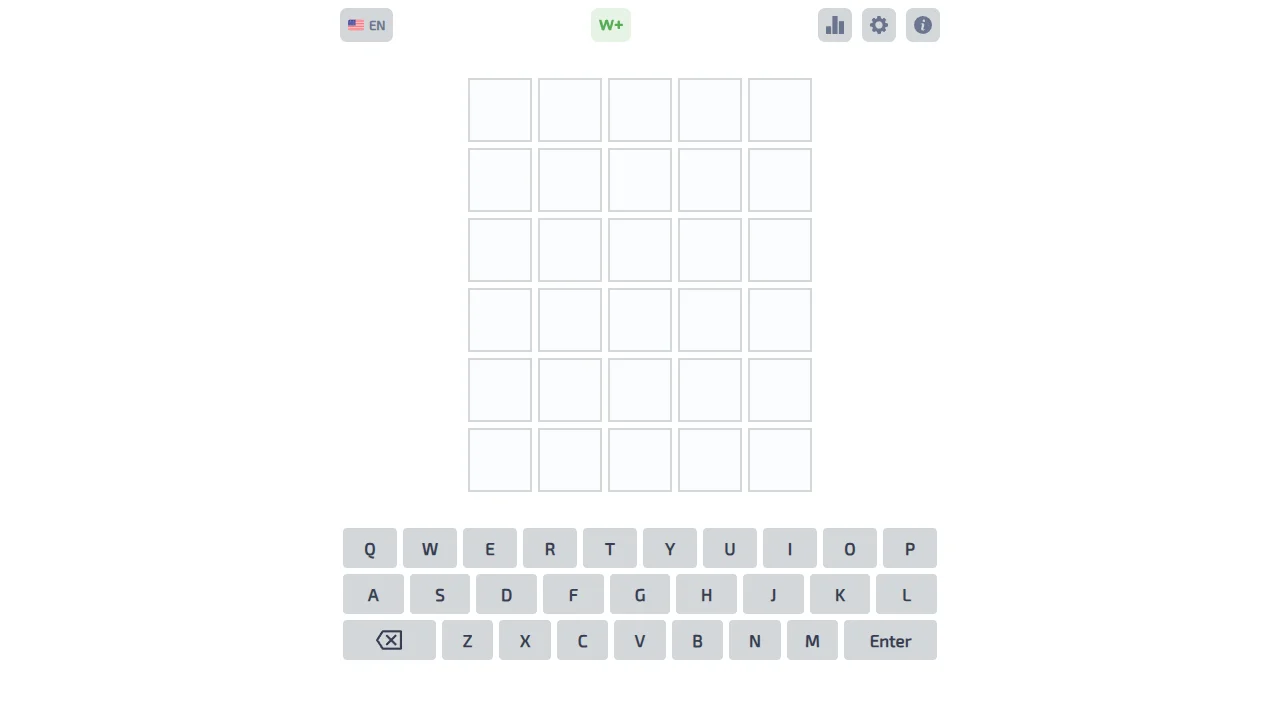
The six-row limit matters because exploration has an expiry date. On rows one and two, a word can be valuable even when it is not a likely answer, provided it tests several untried letters. By row four, that logic reverses: a coverage word that ignores a green tile may spend the very row needed to finish. We therefore label each row before typing—survey, separate, or solve. That tiny habit prevents a late exploratory guess from masquerading as progress.
- Count columns before choosing the opener
The AZGames build can show different word lengths. A five-letter favorite is useless on a longer board, and longer answers reward a wider vowel plan.
- Translate the flip into written constraints
Keep green positions fixed, list every yellow with its forbidden column, and note gray letters separately from gray duplicates.
- Audit the candidate before Enter
Read left to right and reject the word if it breaks even one earlier clue. A familiar-looking answer is not evidence.
Opening words that reveal useful letters
Press Play Now, wait for the board and keyboard to appear, then check the number of columns before typing. Enter a real word with the physical keyboard or the on-screen letters and submit with Enter. Invalid dictionary entries do not consume a row, but they also reveal nothing. In our test, the best first move was not simply a favorite word: it was a word containing common vowels and five different letters. After the tiles flip, we wrote the pattern as fixed positions, present-but-misplaced letters, and excluded letters before touching the second row.
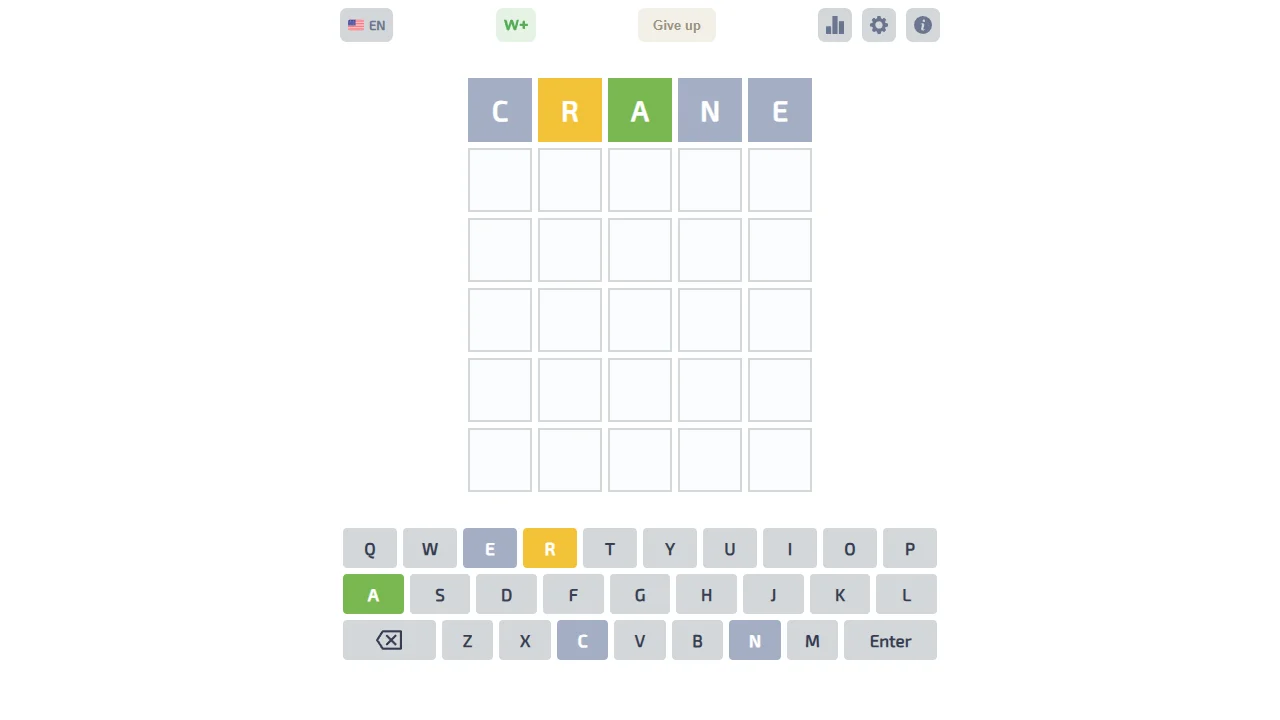
Green, yellow, gray, and duplicate-letter accounting
The important detail is that feedback applies to both identity and quantity. If a guess contains two copies of a letter and only one receives color, the answer may contain only one copy, or the second copy may be blocked by how the game allocates matches. A gray duplicate therefore does not always prove that the letter is completely absent when another copy is green or yellow. We treat green squares as anchors, move yellow letters only into still-legal columns, and keep gray letters out unless duplicate behavior gives us a concrete reason to reconsider them. Changing the word length changes the search space, not the meaning of the colors.
| Tile state | Hard fact | Next-guess use |
|---|---|---|
| Green | This letter belongs in this exact column | Lock it unless the mode explicitly allows a non-hard probe |
| Yellow | The answer contains the letter, but not here | Move it through still-open columns without losing other confirmed letters |
| Gray, no colored twin | The letter is normally absent | Remove it from candidate spellings |
| Gray beside a colored twin | The extra copy was not matched | Treat quantity as unresolved until the colored copy is accounted for |
Count colored and gray copies before eliminating a letter
Wordle Game strategy from row three onward
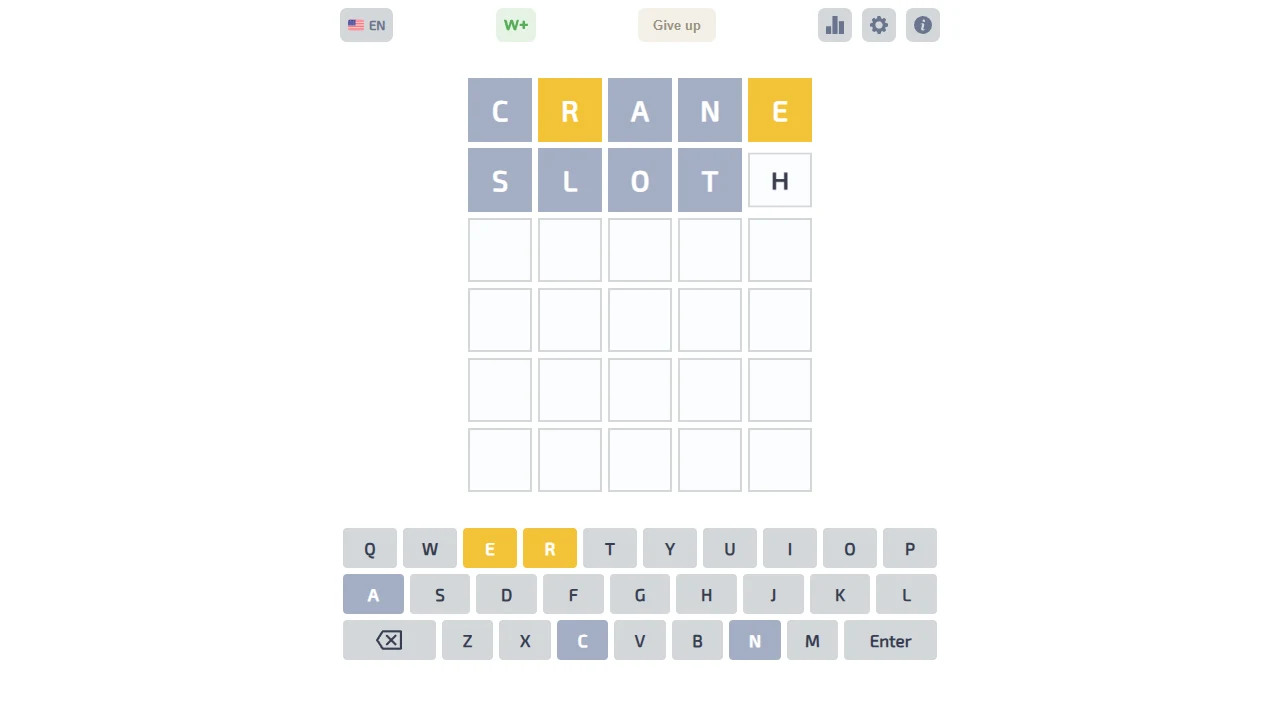
For the opening two rows, information is usually worth more than a risky answer guess. A broad opener such as CRANE tests two vowels and common consonants. If it returns little, a second probe using five fresh letters can remove half the keyboard. Once we have two or three confirmed letters, we stop playing coverage words and build candidates against every clue at once. We found it useful to read each candidate from left to right and reject it immediately if it repeats a gray letter, puts a yellow back in its old square, or conflicts with a green. With two guesses left, we compare the remaining candidates and ask whether one test word can distinguish them; guessing one candidate blindly is only sensible when no useful separator exists.
A useful separator is not automatically a legal answer candidate. Suppose the board leaves CATCH, HATCH, MATCH, PATCH, and WATCH. Guessing them serially can consume every remaining row. A word containing several of C, H, M, P, and W can identify the opening consonant in one move, but only if enough guesses remain and the current rules permit ignoring revealed letters. With two rows left, we compare the cost of the separator against the number of candidates it resolves; with one row left, there is no information phase left to buy.
Advanced play depends on letter accounting rather than vocabulary alone. When a guess repeats a letter, the pattern tells us something about how many copies the answer can support. We compare each colored copy with the gray copies before removing that letter from the keyboard. We also rank positions differently: common starting consonants, frequent vowel slots, and common suffixes help us decide where a yellow is most likely to move, but likelihood never overrides a hard clue. If hard mode is active, every revealed clue may have to appear in future guesses, which can prevent broad separator words. Our workaround is to look for legal separators that retain the required letters while rotating the uncertain characters through open positions. The strongest candidate is the one that explains the entire board with no exception, not merely the one that feels familiar.
A complete six-row decision review
A complete solve is easier when we divide the six rows into jobs. Row one maps broad letter frequency. Row two either adds fresh letters or tests a strong pattern created by row one. Rows three and four are where we convert information into a short candidate list; at this point every proposed word must obey all greens, yellows, and confirmed exclusions. Rows five and six are not ordinary exploration rows. Before using them, we write the surviving answers and identify exactly which position separates them. In a five-letter puzzle, endings such as -IGHT, -OUND, or _ATCH often create several near-identical candidates. Instead of guessing through that family one by one, we use an earlier separator containing several possible first letters. This route is slower for the first minute but saves the attempts that matter at the end.
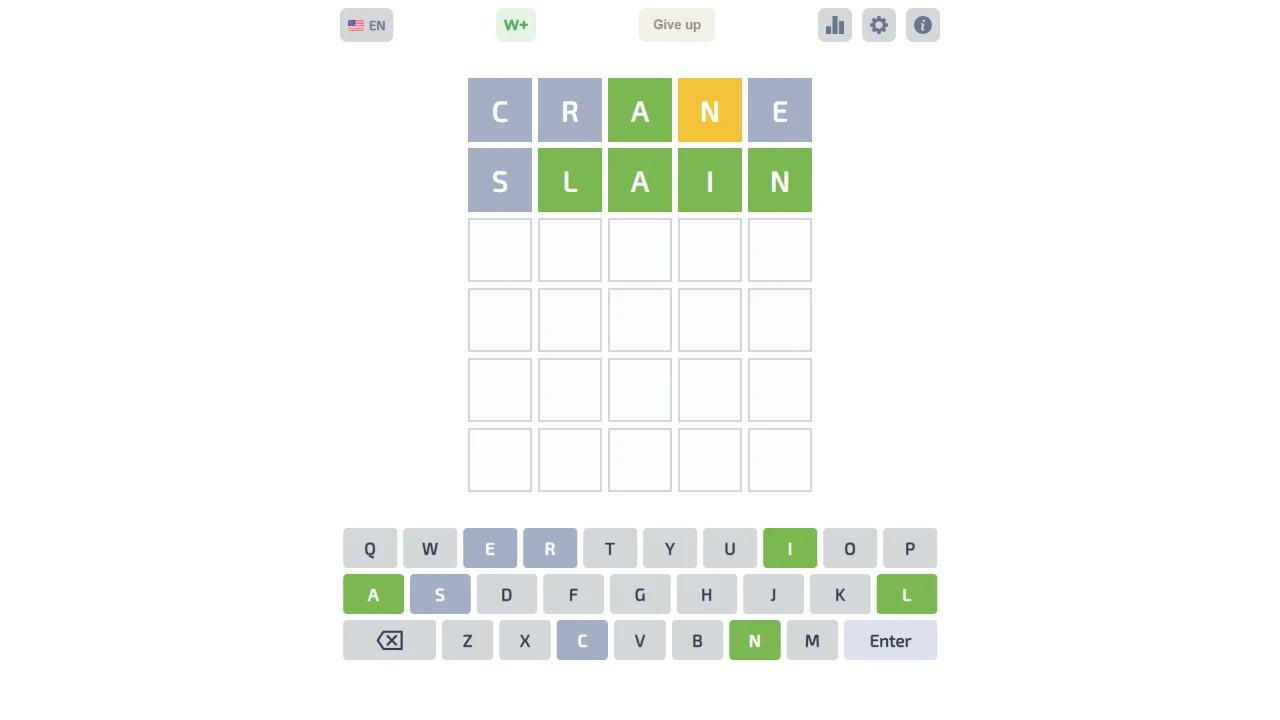
Our cleanest review used a deliberately weak-looking second word after an uninformative opener. It tested five untouched letters and left only one vowel plus a narrow consonant set. The third row obeyed every clue and exposed an ending family. Instead of firing at the first member of that family, we listed the alternatives, used row four to distinguish their first letters, and solved on row five. The important move was the pause between animation and typing: the board had already given enough evidence, but only after we stopped treating each row as a separate riddle.
Endgame traps and recovery checks
The most common failure is solving from memory instead of the board. A word may look perfect because it contains the yellow letters, yet quietly place one yellow in the same forbidden column. Another trap is keeping a beloved opening word after the board has already supplied stronger constraints. We also lost rows by overlooking double letters: a candidate with two Es is not equivalent to one with a single E. Before submitting, we check five things in order—length, green positions, yellow inclusion, yellow exclusion by position, and gray or duplicate counts. That ten-second check is more reliable than entering another plausible word and hoping the colors forgive it.
- Reusing a gray letter because it appears in a favorite word wastes a scarce row.
- Putting a yellow letter back in the same column asks a question the board already answered.
- Guessing an answer family one member at a time is dangerous when a separator can test several initials.
- Assuming every gray duplicate means total absence can eliminate the correct double-letter answer.
- Pressing Enter before the tile animation settles encourages us to plan from incomplete feedback.
For practice, we replay the same opening word for five puzzles and record three numbers: distinct letters confirmed after two rows, guesses used to form a final candidate list, and whether a duplicate caused an error. Then we repeat with a different opener. This quickly shows whether an opener fits our own vocabulary rather than relying on generic rankings. A second drill starts from a nearly solved pattern and forces us to list every plausible completion before entering one. We found that this exposes hidden assumptions, especially forgotten gray letters and yellow-position conflicts. On mobile, the drill also catches autocorrect or accidental double taps. Improvement should appear as fewer unforced rows and cleaner candidate lists, not simply a lucky streak of early answers.
Keyboard, touch, and longer-word modes
Desktop play is fastest with a hardware keyboard, but the touch keyboard makes the puzzle fully usable on a phone. Portrait mode suits a five-letter board; longer variants may be easier in landscape or webpage fullscreen. If letter keys scroll the outer page or do nothing, click once inside the loaded game and try again. Sound is optional and there is no reaction-time advantage, so accessibility features such as browser zoom can be used between guesses. We avoid refreshing a live puzzle because the current state may depend on browser storage. When the frame fails to load, the page retry button is safer than opening several copies of the game.
Wordle Game FAQ
How many guesses do we get?
The visible board provides six submitted guesses. Invalid words are rejected before a row is spent.
What do the colors mean?
Green is the right letter in the right position, yellow is present in another position, and gray normally means absent or an unmatched duplicate.
Should the first guess contain repeated letters?
Usually no. Distinct common letters provide wider opening coverage, while duplicates become useful after the clues suggest them.
Is every puzzle five letters?
This AZGames build offers word-length choices, so count the columns before planning the opener.
What should we do with two guesses left?
List the remaining candidates and use a separator word if one guess can distinguish several otherwise similar answers.