



2048 rules: one direction moves the whole board
2048 is a number puzzle played on sixteen cells arranged in a four-by-four square. Use the four directions to slide every tile as far as it can travel. Equal numbers that meet along that direction combine into their next doubled value: two 2 tiles make 4, two 4 tiles make 8, and the sequence continues through 16, 32, 64, 128, 256, 512, 1024, and 2048. The goal is one tile showing 2048, rather than a total score of 2048.
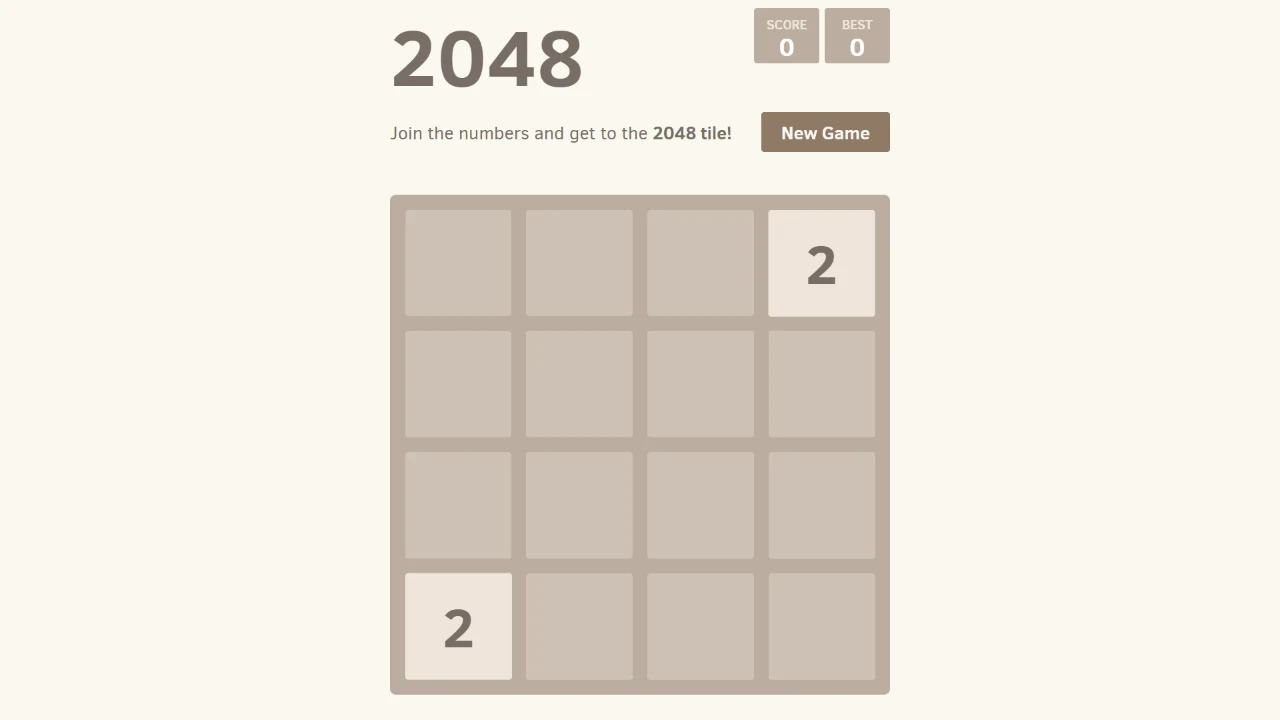
A slide is a board-wide instruction, not a command for the tile nearest your pointer. Pressing Left affects all four rows at once, while pressing Down affects all four columns. Different pairs can merge during the same move, and an attractive combination in one row may rearrange a valuable chain somewhere else. Before committing, look beyond the pair you want and check the destination of your largest tile.
A move that changes the board brings in a new small tile. That means moving without merging usually uses up an empty cell, while a merge creates room before the new tile arrives. If a direction cannot shift or combine anything, it does not advance the position. The puzzle ends when the board has no legal move: every cell is occupied and no equal numbers are adjacent horizontally or vertically. A full board can still be playable if even one neighboring pair can join.
Read the merge order before counting your reward
Tiles are processed from the edge toward which you move. When a pair joins, its new tile cannot merge again during that same input. This prevents a line of four identical values from jumping straight to the next-but-one value. Four 2 tiles moved left become two 4 tiles; a later left move can combine those 4 tiles into 8. Every example below describes the slide itself, before the new random tile is added.
| Row before a left move | Result before the new tile | What to notice |
|---|---|---|
| 2 · 2 · 2 · 2 | 4 · 4 · empty · empty | Two pairs combine; the resulting 4 tiles wait for another move. |
| 2 · empty · 2 · 4 | 4 · 4 · empty · empty | Gaps close before equal values meet, but the new 4 cannot merge again immediately. |
| 4 · 2 · 4 · empty | 4 · 2 · 4 · empty | The 2 separates the 4 tiles; equal values do not jump over another number. |
| 4 · 4 · 8 · 8 | 8 · 16 · empty · empty | Both independent pairs combine, creating two different larger tiles. |
Your score and your largest tile measure different things
A merge contributes the value of its resulting tile to the score. Combining two 8 tiles adds 16 points, but moving a 16 across empty cells adds nothing by itself. Building an 8 from four 2 tiles involves two merges worth 4 each and one worth 8, so that sequence contributes 16 points even though the final tile reads 8. The score records work completed through earlier merges; it is not the sum of the numbers currently visible.
Use this distinction when comparing moves. A move with a large immediate score can leave a badly tangled board, while a small merge can open a path for several future combinations. Treat the score as feedback rather than the instruction for your next swipe. During a difficult position, check whether the move leaves useful neighboring values and an accessible empty area before comparing its points.
2048 strategy: keep a corner and build an ordered edge
Choose a corner for your largest tile and treat the neighboring edge as its supply line. The bottom-left corner is a convenient example: keep the highest number there, place the next useful values along the bottom row, and use the rows above to assemble smaller pairs. Any corner can work. Staying with one arrangement matters more than choosing a supposedly perfect corner.
An ordered edge places large values close to the numbers that can eventually combine with them. A bottom row such as 256, 128, 64, 32 gives you a clear next job: make another 32 near the right end, combine it into 64, and work the resulting values back toward the corner. The numbers do not have to form a flawless sequence on every move. The important point is to avoid isolating a large tile behind a much smaller blocker that has no easy partner.
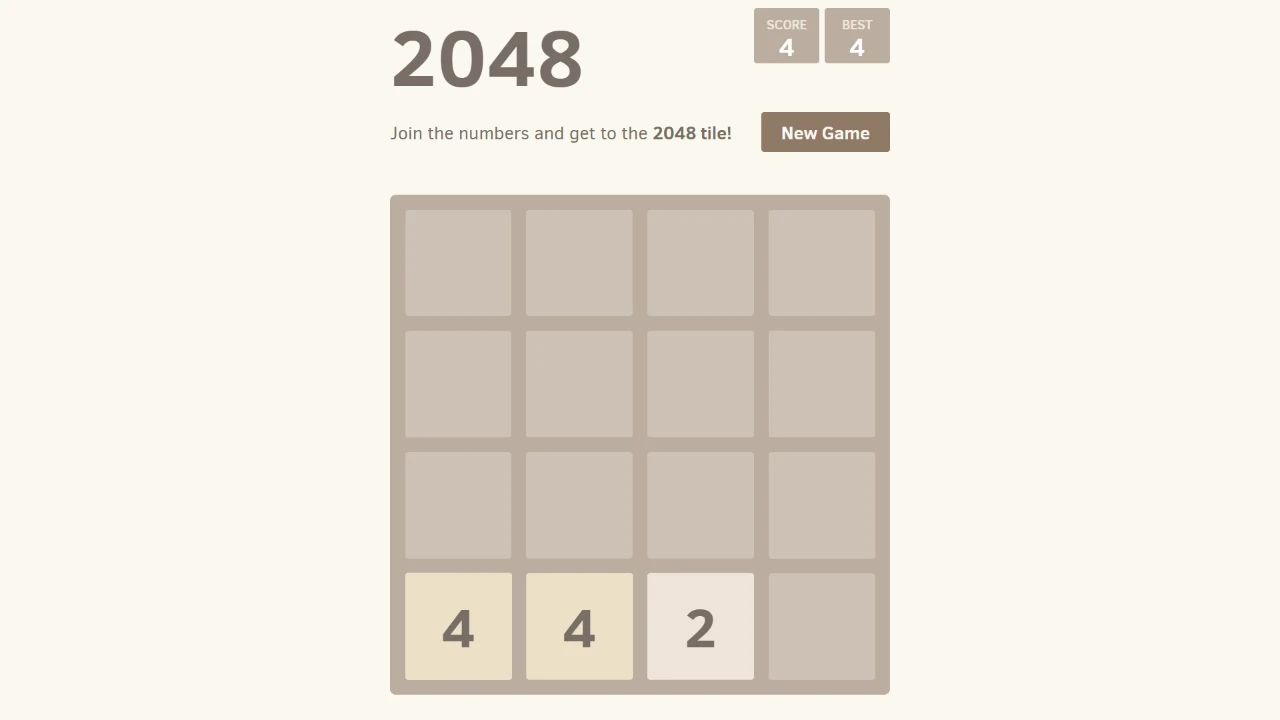
For a bottom-left arrangement, Down and Left usually preserve the intended corner, but they are preferences rather than an automatic two-key solution. You will sometimes need a Right move to align a pair in an upper row. Before using it, inspect the bottom row. A full bottom row with no horizontal merge will stay in place under that move; a row with a gap or an equal pair may shift and release the corner tile. The same caution applies when moving upward against a bottom-edge plan.
As the board grows, extend the arrangement into a loose snake. After filling the bottom edge from high to low, build the next row in the opposite direction so that nearby values can flow toward the end of the chain. Do not sacrifice several open cells simply to make the board look tidy. A usable pair with a clear route is worth more than a decorative sequence that cannot move.
Plan the next pair and the move after it
Before each move, ask two different questions: what changes immediately, and what can I do afterward? A slide that creates a 128 is only helpful if the 128 remains accessible. If it lands behind an unrelated 16 with no matching 16 nearby, the next several moves may have to repair that blockage. Look for sequences that create a useful pair without separating the high values you already organized.
- Locate the next useful equal pair
Choose a pair that contributes to your main chain or frees important space. Two small tiles in a crowded working row may be more urgent than a large pair on opposite sides of the board.
- Trace the entire directional slide
Move each row or column in your mind, starting from the destination edge. Account for every merge, including pairs far from the one that caught your attention.
- Identify the exposed empty cells
Those cells are possible homes for the new tile. Consider whether an inconvenient arrival could block the pair you want to use next or pull your largest value out of position.
- Name a useful follow-up
Pick a likely second direction that preserves the corner or clears another pair. If you cannot describe any reasonable continuation, compare a different first move before committing.
Consider a row reading 256, 128, 64, 64. A left slide first produces 256, 128, 128, empty; those 128 tiles can combine on a later move, and a further move may then join the two 256 tiles. This is a cascade across separate turns, not a single instant 512. The new tiles and the other three rows still matter between those turns, so check them after each input instead of entering the whole sequence blindly.
You cannot choose where the next tile appears, and it is rarely practical to calculate every possible future board. A useful compromise is to test the most inconvenient empty cell for your intended plan. If a small tile there would ruin the only available follow-up, the move is fragile. Prefer a direction that leaves another merge available elsewhere, even if its immediate result is a little smaller.
Recover space when the grid becomes crowded
Empty cells are working room. They let a pair slide into alignment, let a new tile arrive without blocking a valuable edge, and give you choices when one direction becomes useless. Count them whenever the board starts to feel cramped. With several open cells you can prepare a longer chain; with only one or two, the immediate task is often to make dependable merges and avoid spending your final gap on an unnecessary shuffle.
| Position | First check | A useful response |
|---|---|---|
| One open cell, no obvious large merge | Are there small equal neighbors in another row or column? | Clear the small pair before trying to complete the large chain. |
| The board is full | Does any equal pair touch along an edge? | Use a direction that joins that pair; diagonal matches do not count. |
| Two large equal tiles have a small tile between them | Can the blocker merge or move into another row? | Build a partner for the blocker or shift its row while protecting the large tiles. |
| The corner must be opened | Which direction gives a reliable follow-up? | Choose the least disruptive release, then try to restore the edge before resuming growth. |
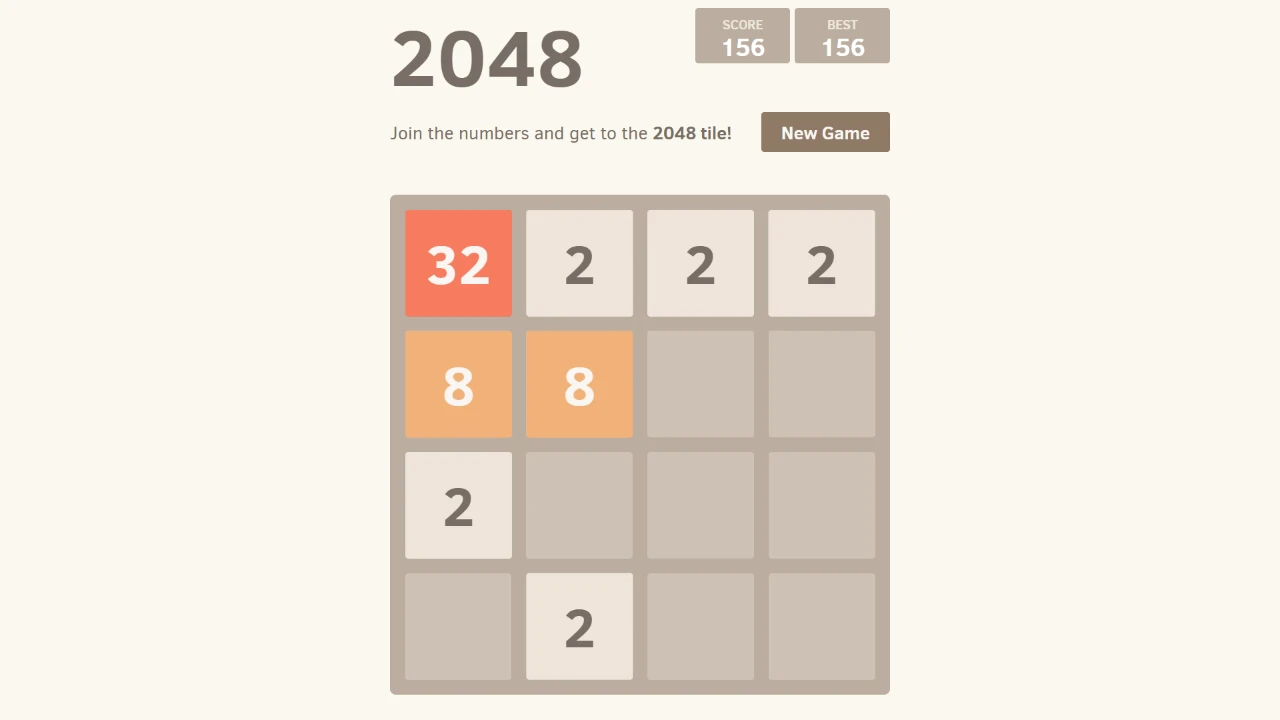
When no comfortable direction remains, avoiding the forbidden direction at all costs can be worse than a controlled recovery. A temporary move away from the corner may be necessary to unlock a merge. Before doing it, identify where the largest tile will stop and how you might move it back. You may not be able to restore the exact previous board, but preserving a workable cluster of high values is still better than scattering them with several unplanned turns.
Separate a lost position from an awkward one. A board with no empty cells is not automatically finished; equal edge-sharing tiles can still merge. Conversely, two identical numbers at opposite corners do not help if every row and column is blocked by different values. Scan each horizontal and vertical boundary once. If none joins equal numbers and nothing can slide, the attempt is over; otherwise there is still a legal move to examine.
Build from 512 toward the 2048 tile
A 512 changes the scale of the puzzle, but it does not change the rules. To reach 1024 you need another 512 beside it in the direction of a future move. The same relationship repeats for 2048: two 1024 tiles must eventually meet. Think of the large value as the settled end of a chain and the smaller tiles as the part you are still constructing. Constantly moving the settled end makes that construction harder.
After reaching a new milestone, pause and choose the next supply area. If 512 sits in the bottom-left corner, a nearby 256 can become the foundation for the second 512. The 128 and 64 values farther along the edge are not spare clutter; they represent progress toward that partner. Protect their access to one another, and use the upper rows for new 2s, 4s, and other small values. Your attention should move toward the low end of the chain, where most useful work remains.
- Keep the largest tile reachable from its future partner; a high number stranded behind unrelated values is difficult to use.
- Combine small pairs in the working area before they form several different isolated values.
- Compare both destinations of a large pair: the same merge can finish in a useful corner or an inconvenient central cell.
- After every milestone, recount open cells and inspect the edge instead of assuming the successful move also left a safe position.
Do not restart merely because the board no longer resembles your ideal diagram. A slightly uneven chain may recover through a few small merges, and those decisions are valuable practice. On the other hand, a large tile alone does not make a position healthy: one 1024 surrounded by isolated numbers can be closer to defeat than a well-organized board topped by 256. Judge the combination of access, empty space, and neighboring pairs.
Reaching 2048 completes the named objective. If the game offers a Keep going choice, you can continue toward larger values using the same merge rules; choose a new game when you want a fresh attempt. Any continued run still depends on keeping legal moves available. There is no need to rush the final 1024 pair: check its direction and the rest of the grid just as carefully as an early merge.
Keyboard, touch, and a useful practice routine
On a desktop keyboard, use one Arrow-key press for one intended direction and wait for the board to settle before pressing again. Click inside the loaded game first if the arrows move the surrounding webpage. On a touch screen, begin a clear horizontal or vertical swipe inside the board. Diagonal gestures are harder to interpret consistently. If the page scrolls instead, enlarge the player with its fullscreen control and start the next gesture nearer the center of the grid.
The board is readable without sound, and deliberate pauses are part of good play. Increasing speed does not improve a choice that overlooks a blocker. When learning, make a prediction before each input: which pair will join, where the largest tile will stop, and roughly how much space will remain. Then compare your prediction with the resulting board. This reveals misunderstandings about merge order much faster than repeating an unexplained sequence of directions.
- Practice one corner for several attempts
Keep the same intended arrangement so you can recognize which moves help it and which moves repeatedly release your largest tile.
- Review the first uncomfortable turn
After a loss, look back to the moment you ran short of space or broke the edge. The final blocked move is often a consequence of that earlier choice.
- Change one habit on the next run
You might check the bottom row before moving right, stop holding a key, or clear low pairs sooner. A specific adjustment is easier to evaluate than changing everything at once.
Use the game’s own new-game or restart control when you intentionally want to abandon the current grid. Reloading the page or clearing browser storage is not a strategy tool, and progress behavior can differ between devices or browser sessions. If the player fails to load, use its retry control and check your connection. Once the board responds, return to ordinary single moves rather than repeatedly reopening the game.
2048 FAQ: merges, scoring, and blocked boards
Why did four 2 tiles become two 4 tiles instead of one 8?
Each resulting tile can merge only once in one directional move. The four 2 tiles form two separate 4 tiles first. Another move can join those 4 tiles if they remain aligned.
Do two equal numbers merge when they touch diagonally?
No. Movement and merging use rows and columns. Diagonal matches need to be brought into the same row or column without another tile blocking the path.
Why is my score higher than the number on my largest tile?
The score adds the values produced by successful merges over the whole attempt. Your largest tile shows only one result currently on the board, so the two numbers describe different things.
Is keeping the biggest tile in a corner enough to win?
It helps organize the board, but it does not guarantee a win. You also need useful neighboring values, empty cells, and a response to newly appearing tiles. A fixed corner cannot rescue every blocked working area.
Does a full grid always mean game over?
No. If two equal tiles touch horizontally or vertically, a move can still merge them. The run ends when no tile can slide and no equal edge-sharing pair can combine.
Can I continue after making 2048?
If a Keep going control appears, you can use it to pursue larger tiles while legal moves remain. The named challenge is already complete, and starting a fresh board is also an option.