

Waffle rules: six words and a 15-swap budget
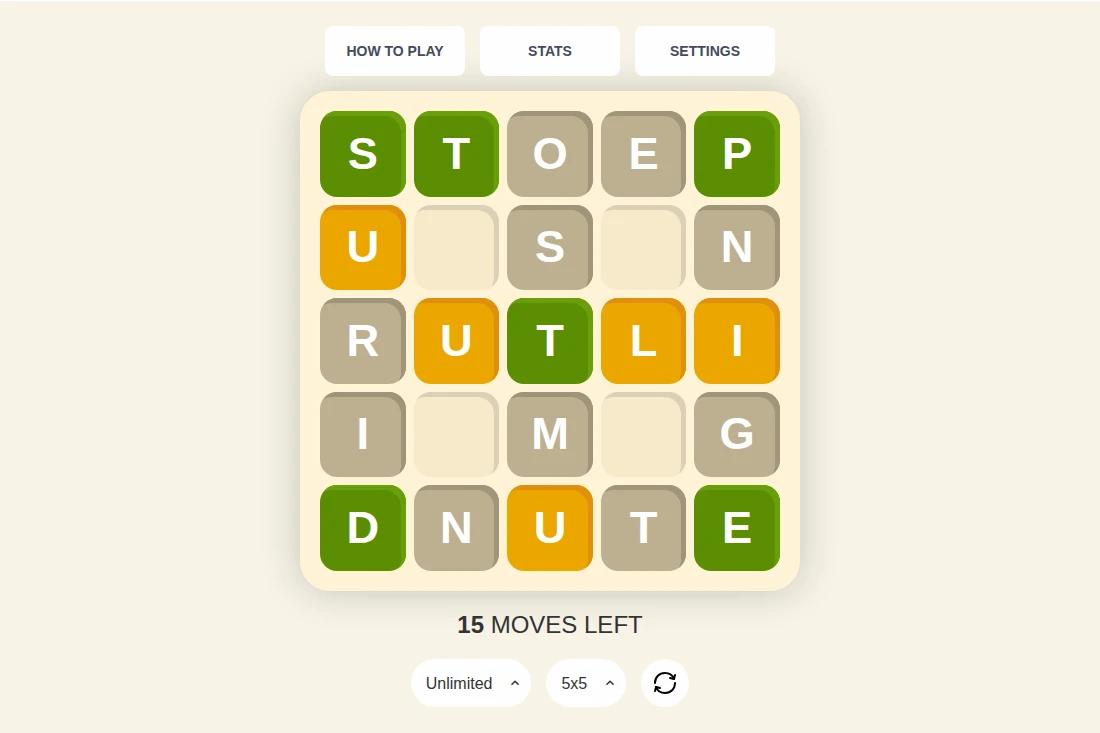
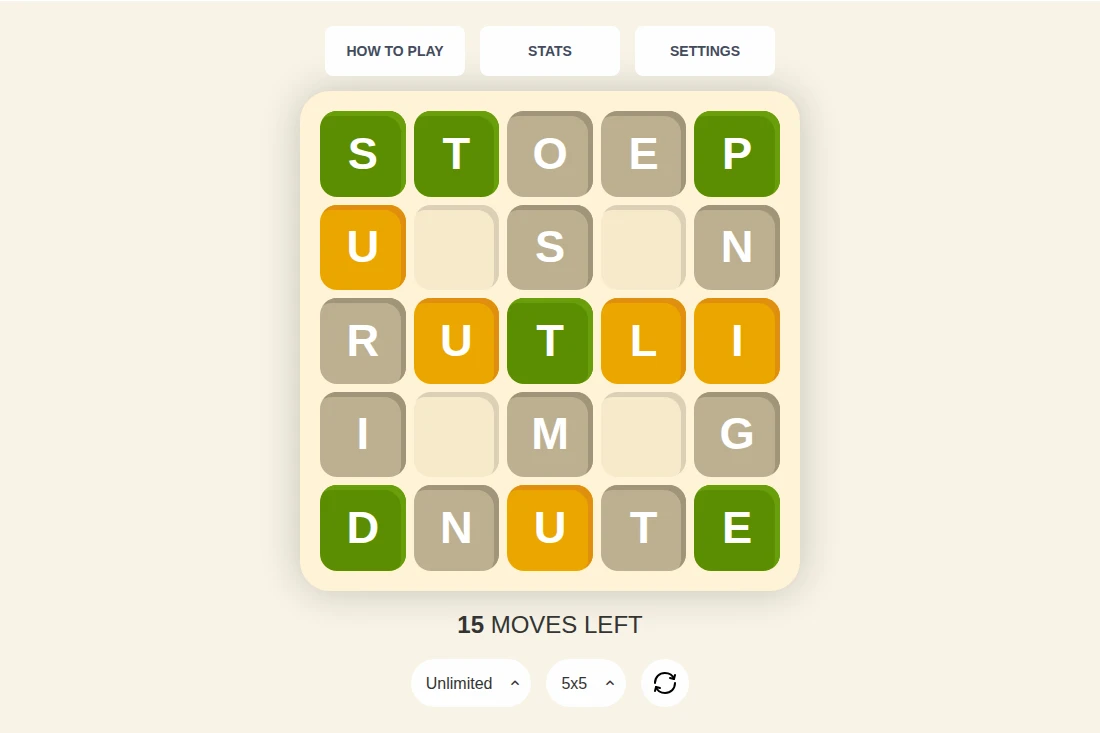
Waffle starts with all the letters needed for six words already on the board. Three run across and three run down, sharing the crossing squares. Instead of typing guesses, drag one movable tile onto another and restore every word before the move counter runs out. Green tiles are correct and stay locked. Yellow means a letter belongs elsewhere in one of its words; a gray tile needs a different position. The five-by-five Unlimited board starts with fifteen moves. Complete all six words while saving as many moves as possible, and use the restart control when you want a fresh puzzle. The size selector also offers other boards; the fifteen-move advice here applies to five-by-five.
| Tile clue | Horizontal reading | Vertical reading | Safe response |
|---|---|---|---|
| Green | Correct in its row word | Correct in its column word when on a crossing | Keep this locked tile in place and solve the remaining squares around it |
| Yellow | Needed elsewhere in the relevant word | May be judged differently on its other axis | Check both candidate words before choosing a destination |
| Gray | Not correctly placed for that word | Could still serve the crossing word | Do not discard until both directions and duplicate counts are checked |
Read colors horizontally and vertically
Colors are contextual. A yellow tile in a horizontal arm may need another position in that horizontal word, while the same crossing square also participates vertically. Duplicate letters require care because one copy can be green while another remains yellow or gray. The board contains the exact multiset of solution letters; no new characters are introduced. A swap has two consequences, so we evaluate both ends: where the chosen letter is going and what fills the hole it leaves. The move counter makes neutral swaps expensive. A good exchange places at least one letter, preserves greens, and ideally sends the displaced letter toward a second known home.
Freeze green anchors before moving yellow tiles
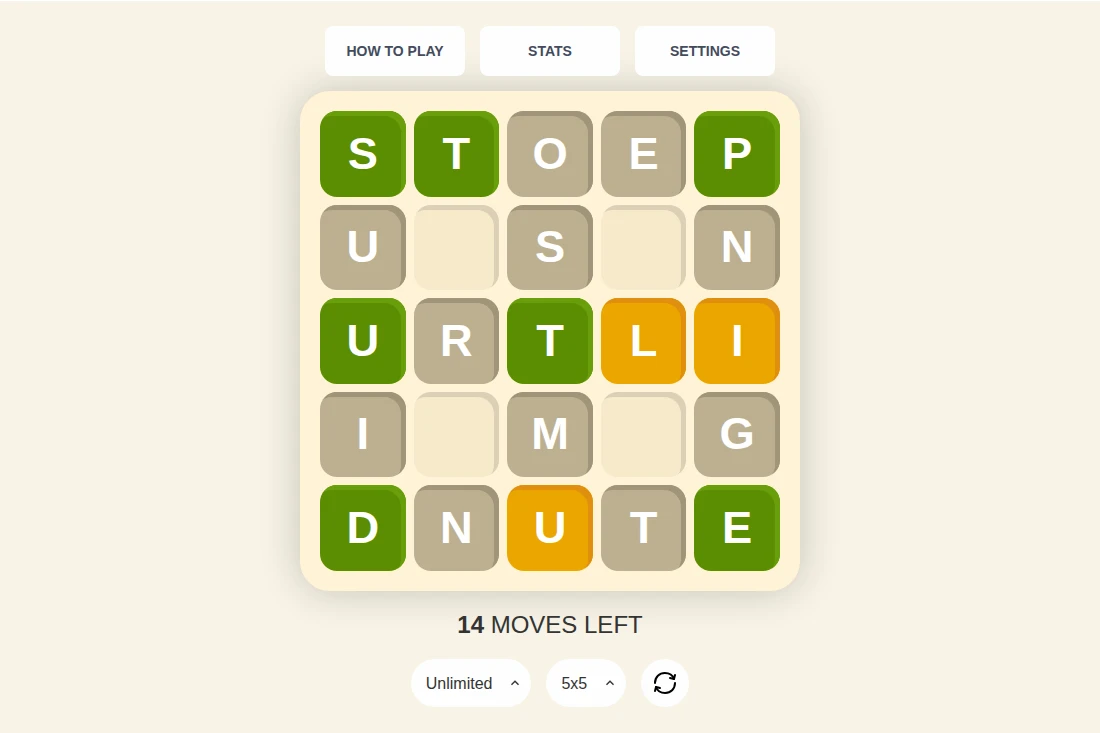
Read How to Play, close the panel, and inspect the whole waffle before dragging anything. Press and hold a movable tile, drag it onto another movable tile, then release. Two separate clicks do not exchange the letters in this version. Keep the green squares fixed and read the three horizontal patterns and three vertical patterns as separate word clues. A crossing belongs to both, so a correct placement can resolve two lines. Name likely words before moving, then check the destination of the displaced letter as carefully as the tile you are holding.
A swap has a double price and a double opportunity. The selected tile leaves one square while the destination tile leaves another, so a move can fix two positions, fix one and damage one, or simply rotate the disorder. We score proposed swaps as +2, +1, 0, or negative before moving. A +2 move locks both destinations; a +1 move is acceptable if the displaced tile enters a known route; a zero move must open a cycle; a negative move needs extraordinary justification.
Waffle strategy for two-way swaps and cycles
We begin with lines that have the most greens, since their pattern admits fewer words. If a row reads G _ E E N, the missing letter is nearly forced; then we locate that tile and inspect what its current square requires. This creates swap chains rather than isolated fixes. Crossings are high-value anchors because solving one constrains two words, but guessing an uncertain crossing can contaminate both. When two letters appear to belong in each other's positions, we take the direct exchange. When a three-cycle is needed, we plan all three placements before making the first move so the temporary wrong tile has a deliberate next destination.
Solve cycles instead of chasing single tiles
When A belongs in B’s square, B belongs in C’s square, and C belongs in A’s square, there is no one perfect direct swap. We write the cycle and choose a temporary placement that advances two letters across two moves. This prevents the classic loop where a yellow tile is moved to its home, dislodged to repair the crossing word, then moved back again. Fifteen swaps are generous only when each displacement has a destination.
Waffle can be modeled as a permutation rather than six separate vocabulary questions. The board already contains the correct multiset, so once likely words are known, every tile has a limited set of legal destinations. Duplicate letters make identity ambiguous, but they also allow us to choose the copy that creates the shortest swap cycle. Corner and crossing tiles carry information from two directions; a yellow there may belong elsewhere horizontally, vertically, or either depending on the rule display. We delay uncertain crossings and solve surrounding arms first. When two candidate words share most letters, we compare what each would require in the crossing line. The global arrangement often eliminates a plausible word before its own colors do.
A full 15-swap board review
We solve in three passes. Pass one locks every green and writes a candidate beside each of the six lines. Pass two focuses on crossings: if a horizontal candidate and vertical candidate demand the same crossing letter, that tile becomes a high-confidence destination. Pass three maps swaps. We locate each required tile and ask where the displaced letter belongs before moving anything. Direct pairs are completed first, followed by three-letter cycles planned on paper or mentally. After each swap, we re-read both affected lines because new colors can invalidate an earlier word guess. With five moves remaining, we stop experimenting completely and require every exchange to place at least one certain tile. This route consistently leaves more margin than resolving one row from left to right.
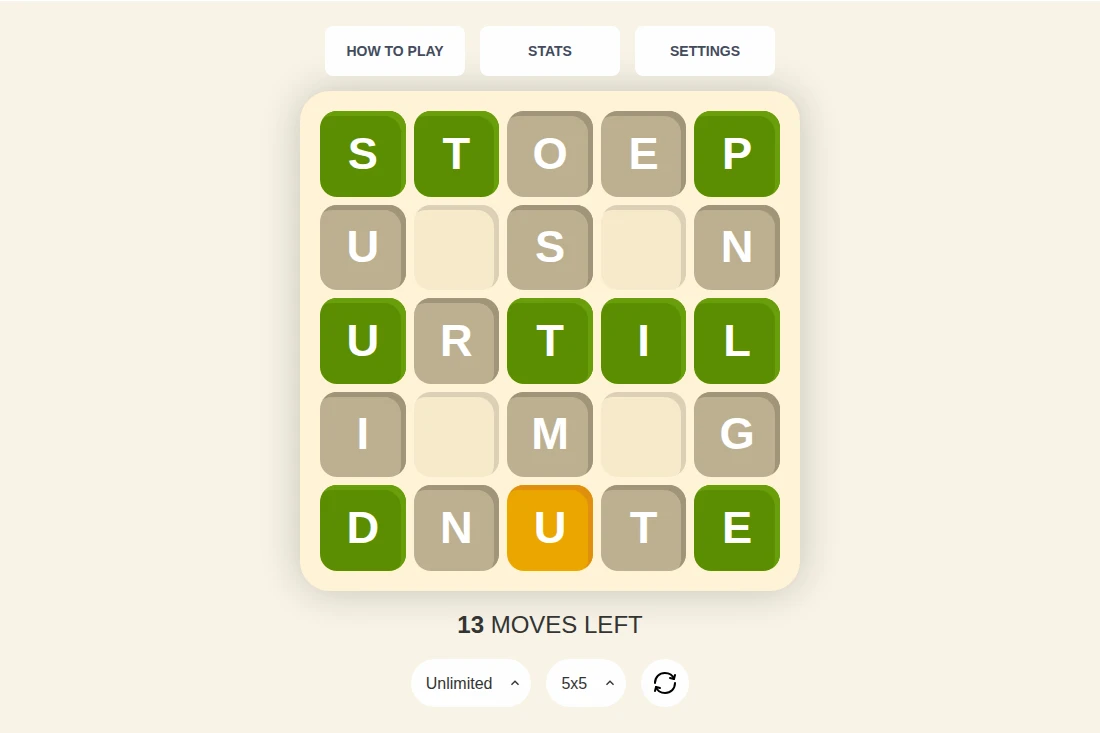
- Outline the six word patterns
Read three rows and three columns, preserving every green anchor and noting which open squares are shared.
- Count duplicate inventory
Match repeated letters to repeated needs before assuming a yellow copy belongs in the most obvious slot.
- Find a two-fix swap
Search for tiles that belong in each other’s squares or start a short cycle with a known endpoint.
- Audit both axes
After the animation, reread the affected row and column; a locally green-looking improvement can expose a new contradiction elsewhere.
Duplicate letters, false homes, and wasted swaps
Random swapping is the fastest way to burn the budget. A tile turning yellow does not necessarily mean the move improved the overall board, and trying to rearrange a locked green wastes planning time. Another trap is deciding a word from its horizontal colors without checking whether the crossing letters make the vertical words impossible. We also verify duplicates before concluding that a gray copy is unwanted everywhere. Before each swap we say two destination claims out loud: this letter belongs there, and the displaced letter can go here or has a known route. If only the first half is true, we search for a better exchange.
Consider a board with several fixed greens and a tempting yellow pair. Exchanging the pair may appear to finish a row, but first check whether its new crossing letter can also complete the column. If the two proposed words disagree at that intersection, pause and reconsider the row instead of spending a move. A better central placement can reveal a three-tile cycle elsewhere. Plan its two exchanges together so the displaced letter has a destination after the first move. The benefit comes from checking the dependency before taking the apparently obvious swap.
For practice, take a screenshot of the opening board and solve the vocabulary away from the game without spending moves. Return only after naming at least four of the six words. Then predict the effect of each swap before making it and mark whether both displaced letters behaved as expected. A second drill aims to finish rather than maximize stars: accept any solution under fifteen moves, review the neutral swaps, and replay the logic mentally to remove them. The measurable skill is not guessing more words; it is reducing exchanges that leave both tiles unresolved. Once neutral swaps disappear, stars usually follow naturally.
Use a mouse to press, drag, and release a tile on desktop. On a touch device, hold the letter and move it to its destination before lifting your finger. Keep five-by-five selected to follow this guide. The player gives the tall board extra room; Webpage Fullscreen is useful when the device keyboard, browser controls, or a small screen leave little space. The puzzle is untimed, so wait for the animation and updated colors before making another exchange. How to Play explains the clues, while Stats and Settings sit above the board. Unlimited is selected below it, beside the size chooser and circular restart button. Restart begins another puzzle, so finish your current plan before using it.
Waffle FAQ
Do we type words in Waffle?
No. Every required letter is already present; we solve by swapping two board tiles at a time.
How many moves are available?
The five-by-five board starts with fifteen moves. Other board sizes have their own move budgets; check the counter before starting.
Should a green tile ever move?
No. Green squares are correct and locked in this version. Rearrange the remaining movable tiles around those anchors.
What does yellow mean at a crossing?
It belongs elsewhere in the relevant line; examine both the horizontal and vertical word before deciding its destination.
How do we save moves?
Plan exchanges that correctly place both letters, or use a preplanned short cycle where every displaced tile has a destination.